
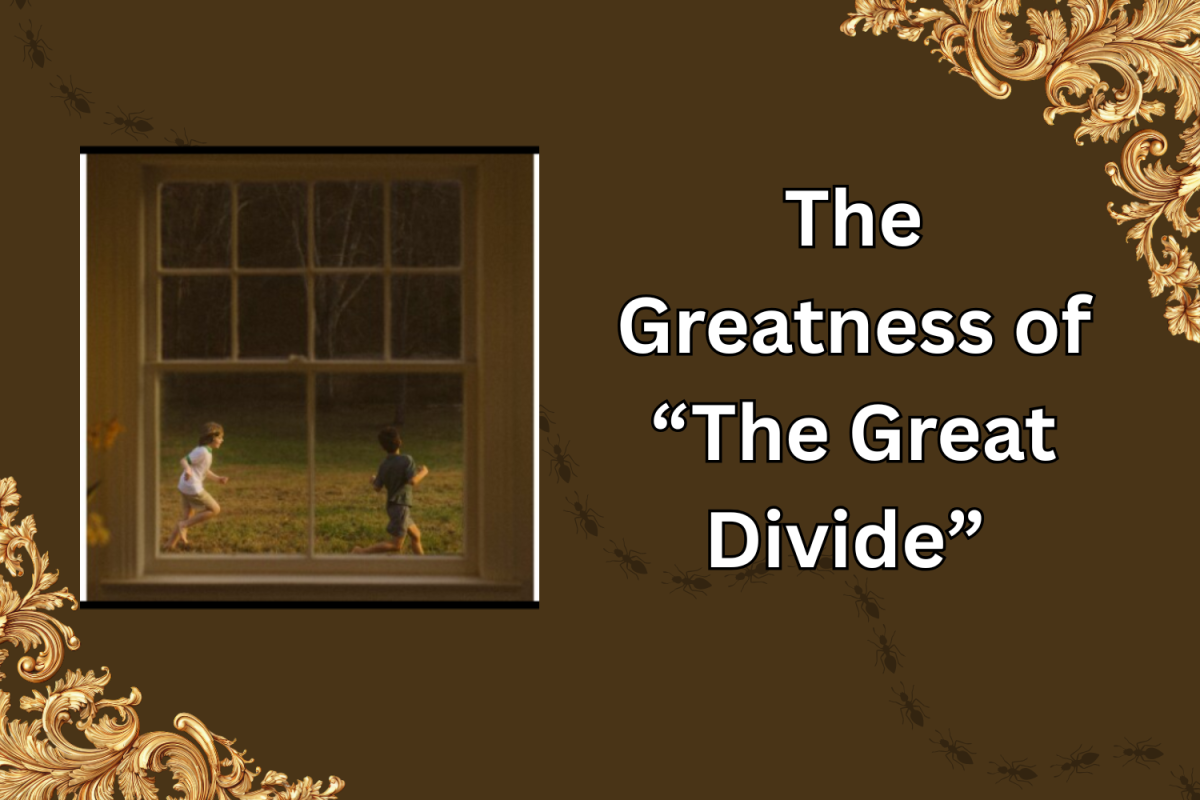
On April 24, 2026, folk singer Noah Kahan released a new album, known as “The Great Divide,” that explores intense themes of finding oneself, leaving behind the past, breaking through obstacles and moving away from home. Between the diverse rhythm of the songs, the depth of the album’s meaning, and the overall focus on making the audience truly feel as though they are experiencing the singer’s emotions, this album is undoubtedly his best yet.
The album consists of a collection of both slow and quick-rhythmed songs. Beats belonging to songs such as “The End of August,” “23” and “Orbiter” explore differing themes of lost love, leaving one’s hometown, the end of friendships and overall the coming-of-age experience of leaving behind what is known to explore and grow in the unknown. The slow rhythm of these types of songs allow for the album to spark a deep, knowledgeable feeling within the audience as its low and slow cadence forces the listener to slow down and think of their own life. Conversely, there are similarly emotion-sparking songs such as “Doors,” “American Cars” and “Paid Time Off” that, while sounding generally happy, still explore ideas of growth and becoming an adult. These songs indicate a recognition of the difficulties and obstacles that come with growing up and growing into new relationships while the up-beat cadence allows for a sense of appreciation for the growth these obstacles facilitate rather than mourning the hardships themselves. Overall, the diverse types of cadences in this album allow for the audience to first-hand experience the bittersweet ordeal that is growing up.
Furthermore, this album’s utilization of intense pauses and outlandish background sounds strikes deep within the audience, as they subconsciously facilitate the recognition of the difficulties and normalcy of these troubles. For example, the beginning of “The End of August” has the sound of crickets behind the music, allowing for the audience to seemingly be audibly transported to the singer’s personal memories about leaving a stagnant, but comfortable, hometown. The crickets provide a natural and sweeping transition into the lyrically genius song itself, as they facilitate the audience’s deep-rooted connection to the speaker by striking a feeling of childhood nostalgia for warm summer evenings. Similarly, in the song “Doors,” Kahan utilizes a strategic pause after stating “So forgive me if I jump.” This pause is an integral piece to the entire song, as it is here that the cadence begins to truly pick up and become more up-beat. This song’s exploration of the journey of leaving behind what is loved in order to grow as a person truly shines through here, as the song goes from a slow exploration of not feeling truly known but being comfortable, seems to pause in thought, and then speaks on the adventure into a new and more well-known self.
Overall, Kahan’s album explores a life of pain, suffering, growth and happiness. This album does an incredible job at allowing the audience to recognize the importance of truly feeling the melancholic nostalgia that resides in understanding the process of moving from childhood to adulthood, and leaving behind the comfortable for growth. This album is truly phenomenal, and any person looking for an understanding of their coming-of-age experience should really give it a listen.