

Pro:
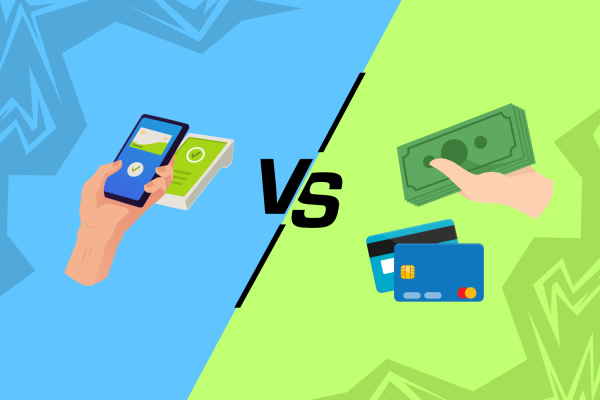
Coming from someone who works as a cashier, when people have to run errands, they get irritable and want to spend as little time grocery shopping as possible. By the time they get to the checkout line, they want everything to go as smoothly as possible, including the payment. However, paying with cash or inserting/swiping a card requires an extra step that people do not want to do. The far more convenient contactless payment method was introduced in 2011 by Google and Android, followed by Apple in 2014. All this requires is opening up the attachment on a phone or smartwatch and holding it up to the payment terminal. Contactless payment is so quick and easy, since a phone is normally in someone’s hand anyway. It also bypasses questions that appear on general pinpads in supermarkets, making the transaction process faster. With advancements in technology, everything is about being faster: better internet, faster cars and more. It makes sense to include payment technology in this rapidly changing world. With the growth of speed in the modern world, contactless payment makes it easier for people to move quicker in their day to day lives, and is convenient for both seller and consumer.
Con:
Tap to pay has created a society that is unaware of the true value of the paper money. With the ability to exchange currency at the tap of a button, Apple Pay and other electronic currency has fostered a dependency on technology that is inescapable. There are many kids today whose access to electronic currency has completely hindered their knowledge of physical money. There are a plethora of middle schoolers who have no idea the true value of money, nor did they ever acquire the integral life skill of counting change. Furthermore, there is a ridiculous risk of overdependence on technology that is introduced by electronic markets and currency. With many real-life stores switching to cashless, society is becoming completely uneducated on the topic of expenses.